Draconian gun controls make guns whisper, not recoil. They turn firearm possession into a privilege rather than a liberty. Scholars have debated the empirical effects of civilian firearm access, not least in the United States. But statistics aside, we must look at a deeper question: does the state have the moral authority to disarm competent law-abiding citizens?
Beginning from first principles will help. A free society rests on the idea that individuals own themselves. The maxim of self-ownership endows individuals with the rights to possessions acquired voluntarily. Property rights flow from this premise. A gun is a type of property. It is dangerous, yes, but tools do not lose moral protection because they are dangerous. What holds for knives and hockey sticks must hold for guns.
Property rights, of course, are not unlimited. No one claims that individuals should be allowed to own nuclear weapons. But that concession is not a case against firearms. The distinction between such extraordinary weapons and guns lies in proportionality and discriminability. Nuclear bombs cannot be used without indiscriminate destruction. Their deployment violates innocent lives. Guns by contrast can be used for defense in ways that are consistent with the rights of others. Robert Nozick did not view gun ownership as infringing the boundaries of others’ rights.
The moral foundation of this position becomes clearer when we turn to the right of self-preservation. Imagine walking home to find a burly attacker lunging at you. John Locke held that an aggressor, by initiating violence, forfeits all claims to not be resisted. You may strike back in self-defense. The right of self-defense is not granted by the state. It precedes political authority and licensing.
Yet a right without a means to exercise it is hollow. A state that makes it difficult for citizens to own guns leaves them unable to defend against lethal violence. Guns are thus an effective means of self-defense.
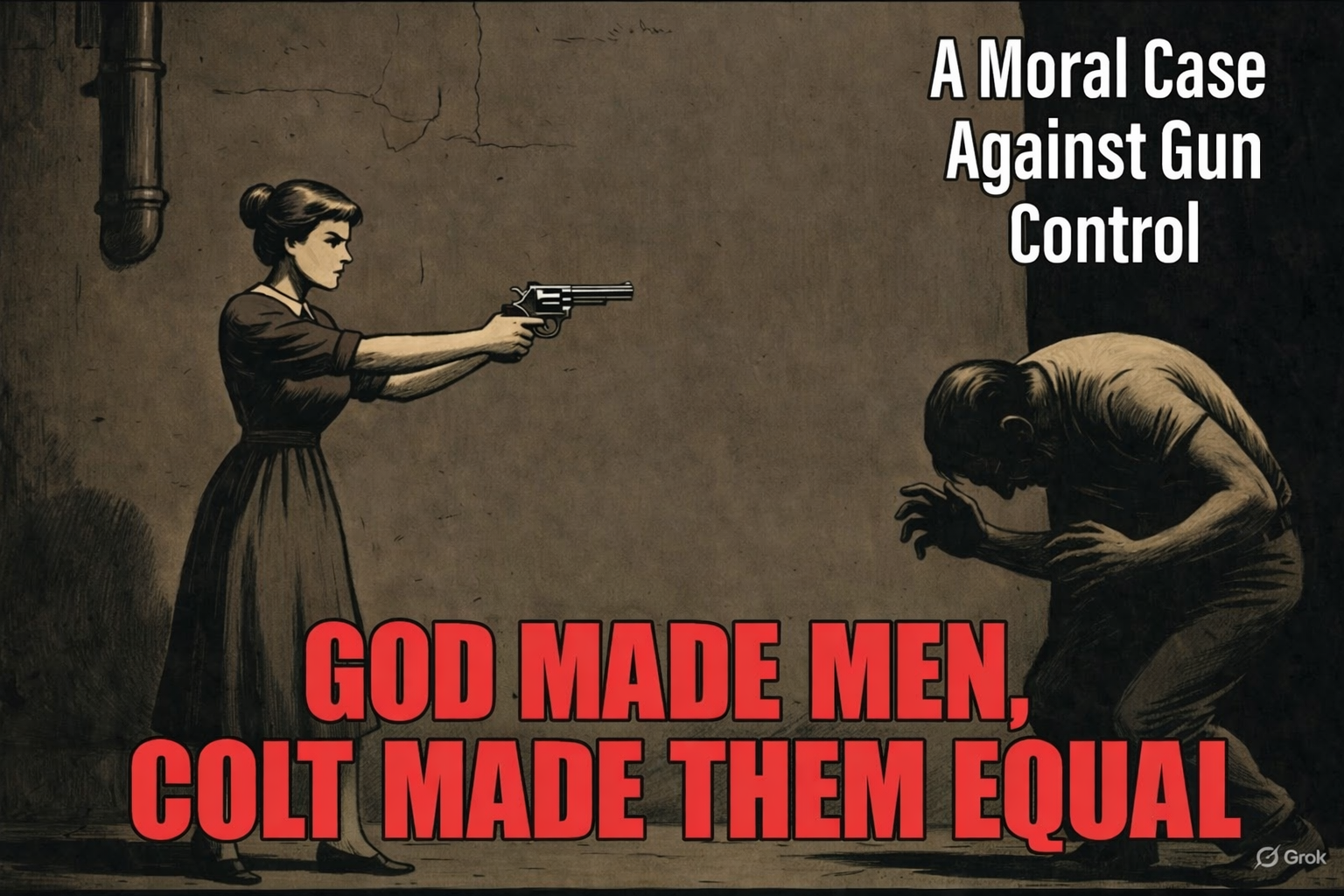
But why just guns? One could in theory defend using swords and knives. Suppose you’re weak and are faced off against that burly man in close combat. In practice, bodily strength would determine the outcome. A firearm remedies that imbalance. Guns are great equalizers allowing the elderly, women, and physically vulnerable to defend themselves.
Restrictionists respond by redefining the right to self-defense. For them, self-defense is a mere means to enhanced safety— a reduced probability of being harmed. If banning guns lowers aggregate violence, they contend rights are best safeguarded. Accepting this premise would indicate that a few unlucky individuals who might have otherwise defended themselves die, but society gains overall security. But as philosopher Lester Hunt argues, this view drains self-defence of its intuitive meaning. Such an understanding leaves no room for people to defend themselves when faced against an aggressor.
The restrictionist camp offers a secondary argument for limiting gun ownership. Philosopher David DeGrazia suggests that a needs-based policy should restrict guns to people who are vulnerable. This argument too fails since people cannot predict when they will be victimized. Putting a burden of clairvoyance on potential victims is unsound.
Security based accounts of gun controls overlook another moral dimension. Philosopher Deane-Peter Baker argues that firearms help assert dignity. How often do we admire those who resist aggression? Resistance affirms people’s status as ‘persons,’ not as tools at the hands of their aggressors.
This is the moral core of the matter. Should citizens be self-authors of their own preservation, or passive wards who must await the protection of centralized authority? In a free society, self-ownership, and dignity are paramount. When anchored on such a moral order, prohibitions on firearm ownership become difficult to defend. The burden of justification then lies not with those who wish to protect themselves, but with those who would disarm them.
Post Disclaimer
The opinions expressed in this essay are those of the authors. They do not purport to reflect the opinions or views of CCS.